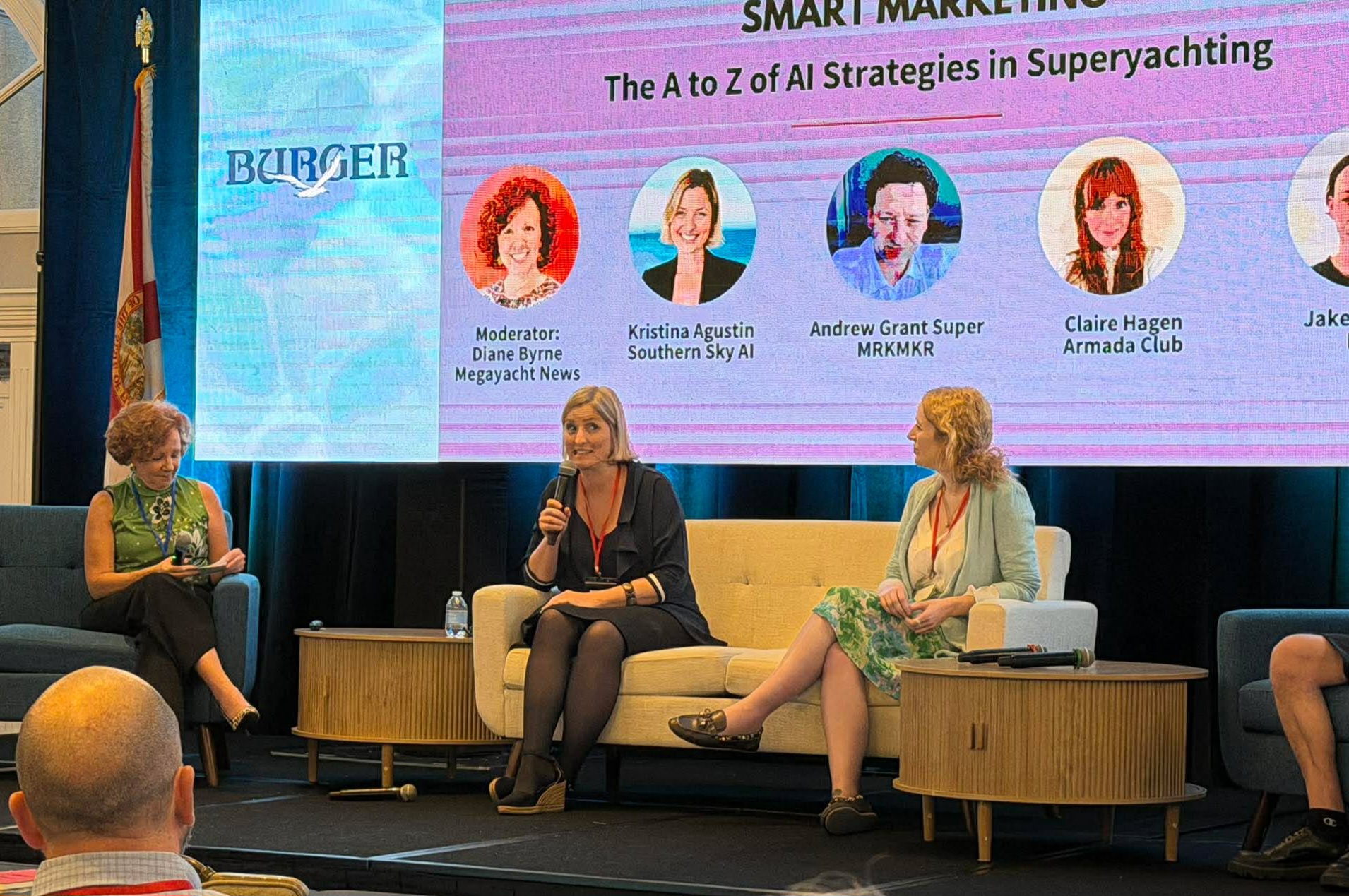

Episode 5, Part 4: Where to Start — This episode provides practical guidance on beginning your AI journey, from identifying the right problems to solve, calculating return on investment, and building the essential foundations for successful implementation.
Start with the Problem, Not the Technology
With all this potential, it's easy to get overwhelmed and distracted by the tools. But real AI success doesn't start with technology—it starts with your business, your pain points, your domain expertise.
Ask yourself:
- —Where are we losing time?
- —Where are the bottlenecks?
- —What's frustrating your team or clients?
That's where the opportunity lies.
Don't start with AI. Start with a problem worth solving.
Refine it down to something specific, something measurable. Then ask: what would a better outcome look like? What kind of time or cost savings could we create, and how would we know if it's working?
The Recommended Progression: Crawl, Walk, Run
Begin internally on a narrow business problem. Aim to get the basics right, involve your team, test, and iterate. Once that's solid, then you can scale outward.
Calculating Return on Investment
To determine the ROI of an AI project, consider three core elements:
- True cost of the role — including salary, benefits, and equipment
- Annualised hours saved
- Opportunity value created by redeploying that time
Case Study: Marine Engineering Contractor
Consider a marine engineering contractor performing site visits and proposals:
Traditional Process:
- —4 hours on site plus travel
- —7 hours preparing the proposal
- —Total: ~11 hours per opportunity
AI-Enabled Process:
- —Onsite work remains 4 hours
- —Automated transcription captures notes instantly
- —Proposal generation is cut significantly
- —Savings: ~3.5 hours per proposal
Year One Cost Savings
- —Average engineering rate (including overhead): $80/hour
- —3.5 hours saved per job × 60 projects/year = $16,800 direct savings
- —Implementation cost: $10,000
- —First year ROI from efficiency: ~68%
Opportunity Revenue Gain
By reducing admin and proposal prep time:
- —Capacity increases from 60 to 90 projects per year
- —Additional 30 jobs at $150,000 average value with 15% margins
- —Added profit: ~$675,000 per year
Combined with time savings, the total annual gain is ~$691,800 relative to a $10,000 implementation—an annualised ROI of roughly 6,800%.
Over five years, the cumulative gain reaches nearly $3.46 million, producing a five-year ROI of around 34,000%.
Building Your Foundations
Once you've defined your problem worth solving and metrics for success, the next step is actually a step backward so we can move forwards with confidence.
Most of us, if we're honest, have been duct-taping systems together just to keep up with technology. Over time, that leads to tech sprawl, messy processes, double handling, and workflows that make you want to cry.
If we plug in AI before we've cleaned house, what we'll get is amplified chaos.
Assess Your Current State
When I say foundations, I don't just mean auditing your tech stack. I mean stepping back and looking at your business processes holistically:
- —What tools are you using?
- —Are they talking to each other?
- —What's your single source of truth?
- —What tools can be consolidated? What needs to go?
Map Your Workflows
Pick a common document—maybe a work order or invoice—and trace its journey:
- —Who touches it?
- —What tools are used?
- —Where does it get stuck?
This gives you a real picture of how work gets done and what needs to change.
Only once your workflows are clearly defined and proven to work does it make sense to add automation and AI.
Ground Zero: Establishing an AI Policy
Recently, an IT provider shared a case where an employee accessed their company's full payroll data and financial information simply by asking Copilot. They hadn't set up permissions correctly.
According to McKinsey's 2025 report, employees are already using AI tools at three times the rate leaders think they are. And we all know that abstinence doesn't work—if we don't set up responsible access, people will find workarounds.
Essential AI Policy Elements
A policy that:
- —Clearly defines what tools are approved
- —Sets user access based on need and role
- —Includes rules around confidentiality and output review
- —Ensures human oversight is always in place for critical decisions
- —Regularly audits usage and outcomes for bias, accuracy, and compliance
Leadership and Culture
Technology doesn't lead change. People do. No matter how powerful the tool, it's your domain expertise and leadership that will determine whether AI delivers real value.
This early momentum is being driven by millennial managers (aged 35–44), who are some of the most confident adopters in the workforce today.
Your Role as a Leader
- —Back your champions — people who know your operations, see the pain points, and are ready to lead from the inside
- —Set the tone — create space for confident experimentation
- —Invest in practical training
- —Encourage experimentation and celebrate early success
- —Engage with AI yourself — show your team it's safe to explore
- —Shift the narrative from "AI replacing" to "AI augmenting" human capabilities, freeing up time for higher-value work